<?xml version="1.0" encoding="UTF-8"?>
<rss version="2.0"
	xmlns:content="http://purl.org/rss/1.0/modules/content/"
	xmlns:wfw="http://wellformedweb.org/CommentAPI/"
	xmlns:dc="http://purl.org/dc/elements/1.1/"
	xmlns:atom="http://www.w3.org/2005/Atom"
	xmlns:sy="http://purl.org/rss/1.0/modules/syndication/"
	xmlns:slash="http://purl.org/rss/1.0/modules/slash/"
	>

<channel>
	<title>Eat. Move. Improve.</title>
	<atom:link href="http://www.eatmoveimprove.com/feed/" rel="self" type="application/rss+xml" />
	<link>http://www.eatmoveimprove.com</link>
	<description>Health &#38; Fitness at Their Simplest</description>
	<lastBuildDate>Mon, 14 May 2012 13:00:52 +0000</lastBuildDate>
	<generator>http://wordpress.org/?v=2.9.2</generator>
	<language>en</language>
	<sy:updatePeriod>hourly</sy:updatePeriod>
	<sy:updateFrequency>1</sy:updateFrequency>
			<item>
		<title>Guest Writer Dan Pope Writes about Knee Pain</title>
		<link>http://www.eatmoveimprove.com/2012/05/1598/</link>
		<comments>http://www.eatmoveimprove.com/2012/05/1598/#comments</comments>
		<pubDate>Mon, 14 May 2012 13:00:52 +0000</pubDate>
		<dc:creator>Chris Salvato</dc:creator>
				<category><![CDATA[News]]></category>

		<guid isPermaLink="false">http://www.eatmoveimprove.com/?p=1598</guid>
		<description><![CDATA[In So, you hurt your knee, Steve talked about various ailments of the knee and referenced how many of them can be issues from upstream problems in the hip, pelvis, and core, and downstream problems in the ankles and feet.
Today, guest writer Dan Pope, who is also working on his physical therapy degree and trains [...]]]></description>
			<content:encoded><![CDATA[<p><!--  /* Style Definitions */ p.MsoNormal, li.MsoNormal, div.MsoNormal 	{mso-style-unhide:no; 	mso-style-qformat:yes; 	mso-style-parent:""; 	margin:0in; 	margin-bottom:.0001pt; 	mso-pagination:widow-orphan; 	mso-hyphenate:none; 	font-size:12.0pt; 	font-family:"Times New Roman"; 	mso-fareast-font-family:"Times New Roman"; 	mso-fareast-language:AR-SA;} a:link, span.MsoHyperlink 	{mso-style-unhide:no; 	color:blue; 	text-decoration:underline; 	text-underline:single;} a:visited, span.MsoHyperlinkFollowed 	{mso-style-noshow:yes; 	mso-style-priority:99; 	color:purple; 	mso-themecolor:followedhyperlink; 	text-decoration:underline; 	text-underline:single;} p 	{mso-style-unhide:no; 	margin-top:14.0pt; 	margin-right:0in; 	margin-bottom:14.0pt; 	margin-left:0in; 	mso-pagination:widow-orphan; 	mso-hyphenate:none; 	font-size:12.0pt; 	font-family:"Times New Roman"; 	mso-fareast-font-family:"Times New Roman"; 	mso-fareast-language:AR-SA;} .MsoChpDefault 	{mso-style-type:export-only; 	mso-default-props:yes; 	font-size:10.0pt; 	mso-ansi-font-size:10.0pt; 	mso-bidi-font-size:10.0pt;} @page WordSection1 	{size:8.5in 11.0in; 	margin:1.0in 1.25in 1.0in 1.25in; 	mso-header-margin:.5in; 	mso-footer-margin:.5in; 	mso-paper-source:0;} div.WordSection1 	{page:WordSection1;} -->In <a href="http://www.eatmoveimprove.com/2011/05/so-you-hurt-your-knee/">So, you hurt your knee</a>, Steve talked about various ailments of the knee and referenced how many of them can be issues from upstream problems in the hip, pelvis, and core, and downstream problems in the ankles and feet.</p>
<p>Today, guest writer Dan Pope, who is also working on his physical therapy degree and trains strongman and CrossFit, has shared part one in his series of understanding the foot and hip&#8217;s role in knee pain.</p>
<p>If you want to read on, you can check out the other parts on his website, <a href="http://www.fitnesspainfree.com" target="_blank">fitnesspainfree.com</a>.  The links to the other parts are included at the bottom of the article on our site, so click through to read about it <a href="http://www.eatmoveimprove.com/2012/05/understanding-the-foot-and-hips-role-in-knee-pain">here</a>!</p>
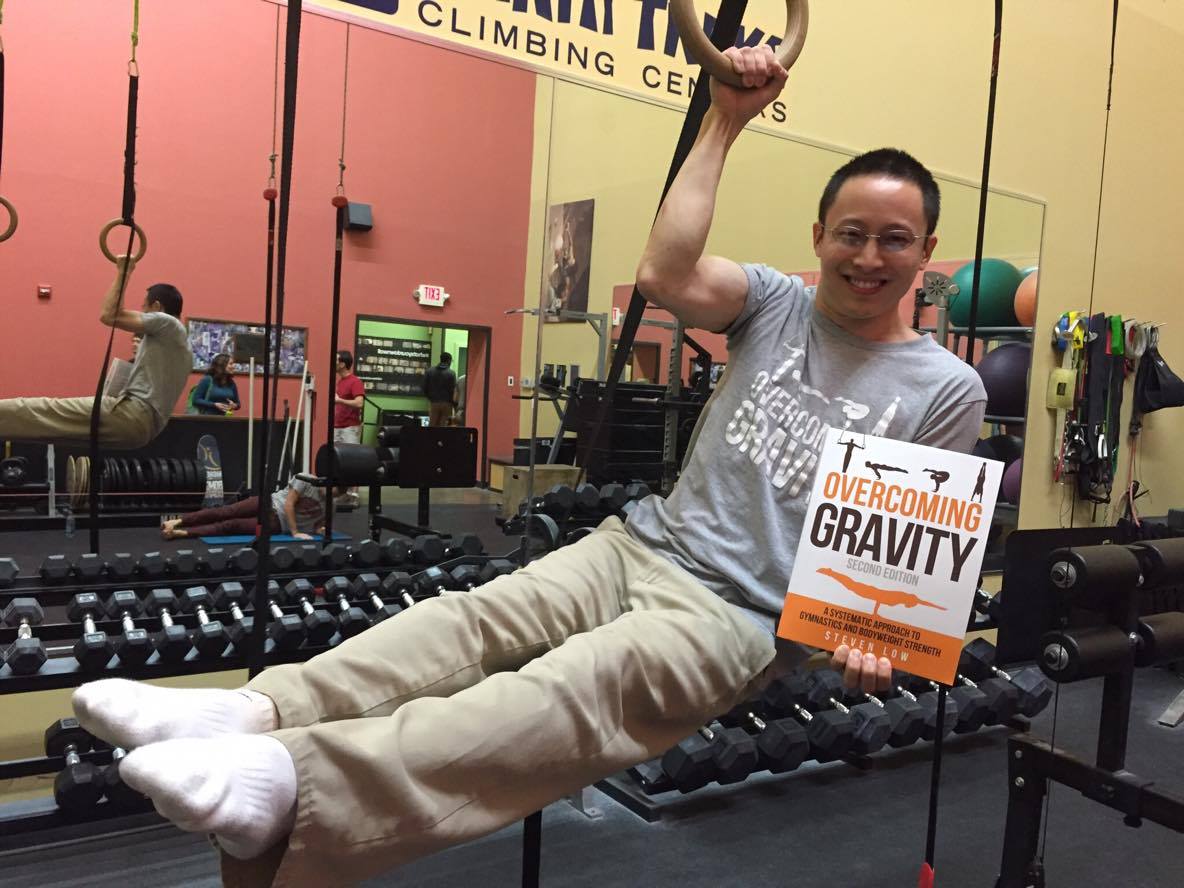
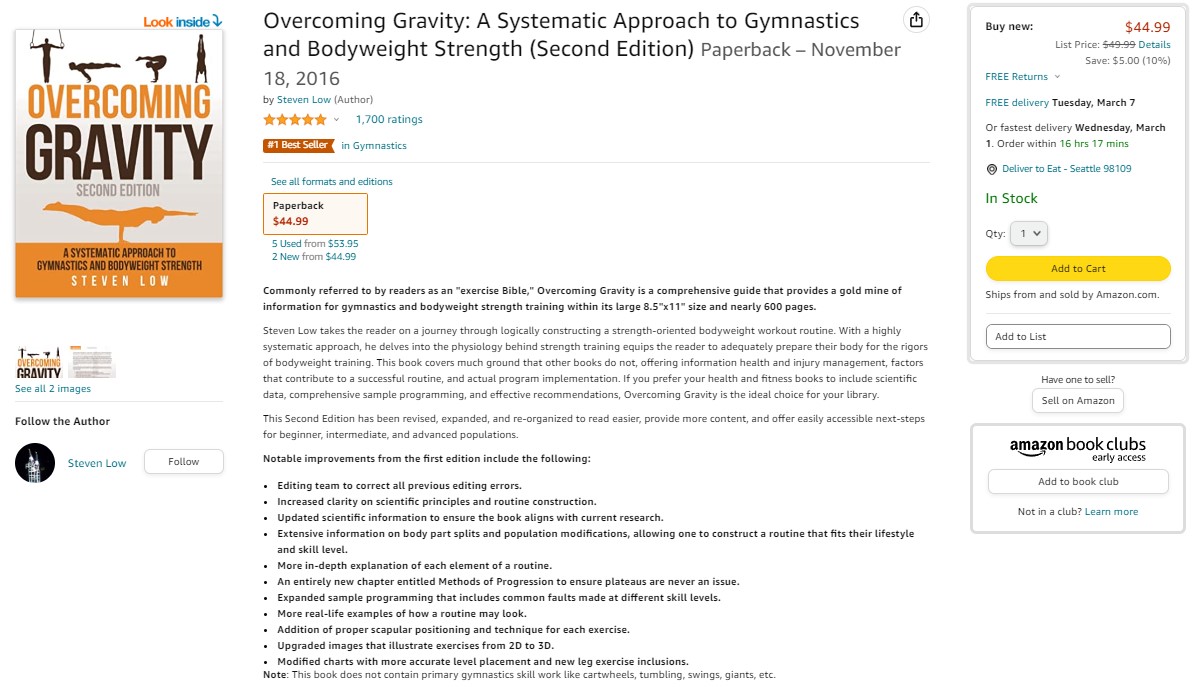
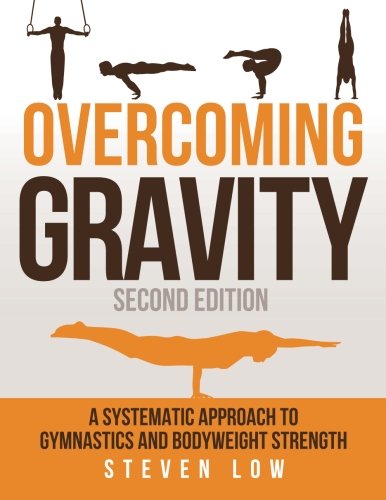
<p>And, as usual, thanks again to the thousands of people who have purchased Steve&#8217;s book, <a href="http://www.eatmoveimprove.com/overcoming-gravity-by-steven-low">Overcoming Gravity</a>.  The response has been tremendous, and Steve already has several plans for future books.  As you know, we always appreciate feedback from fans and readers, so be sure to post your feedback on our <a href="http://eatmoveimprove.com/forum">forum</a> or <a href="http://www.facebook.com/pages/Eat-Move-Improve/168026549746">Facebook page</a>!</p>
]]></content:encoded>
			<wfw:commentRss>http://www.eatmoveimprove.com/2012/05/1598/feed/</wfw:commentRss>
		<slash:comments>0</slash:comments>
		</item>
		<item>
		<title>Understanding the Foot and Hip&#8217;s Role in Knee Pain</title>
		<link>http://www.eatmoveimprove.com/2012/05/understanding-the-foot-and-hips-role-in-knee-pain/</link>
		<comments>http://www.eatmoveimprove.com/2012/05/understanding-the-foot-and-hips-role-in-knee-pain/#comments</comments>
		<pubDate>Mon, 14 May 2012 13:00:34 +0000</pubDate>
		<dc:creator>Dan Pope</dc:creator>
				<category><![CDATA[Articles]]></category>
		<category><![CDATA[Featured]]></category>
		<category><![CDATA[Injuries]]></category>
		<category><![CDATA[Training]]></category>
		<category><![CDATA[exercise]]></category>
		<category><![CDATA[exercises]]></category>
		<category><![CDATA[hip]]></category>
		<category><![CDATA[knee]]></category>
		<category><![CDATA[pain]]></category>
		<category><![CDATA[prehabilitation]]></category>
		<category><![CDATA[rehabilitation]]></category>

		<guid isPermaLink="false">http://www.eatmoveimprove.com/?p=1588</guid>
		<description><![CDATA[Understand how the foot and hip can cause knee pain, and what you can do about it.]]></description>
			<content:encoded><![CDATA[<p>When compared to other areas of the body, the knee joint is a fairly simple joint. It&#8217;s for the most part a hinge joint, like the hinges on your door. Understanding all of the movements that occur at the knee is not too difficult.</p>
<p>Unfortunately the knee is the most commonly injured joint in the legs, being the most common site of overuse injuries in runners. The large degree of ACL injuries in females is also a hot topic and several theories exist as to why this is. People often look at problems within the knee joint as possible causes of pain and injury, patellar tracking issues being a common culprit.</p>
<p>Some research coming from biomechanics expert Chris Powers sheds some light on the situation. He cites research that weak hip musculature is associated with knee injury. He also cites additional research where decreased trunk control and proprioception are factors for knee injury.</p>
<p>We also know that highschool athletes with knee pain (patello-femoral pain syndrome) have on average <a href="http://www.ncbi.nlm.nih.gov/pubmed/21948736">a flatter foot then their pain free peers</a>. Also, foot orthotics are an effective treatment in patients with knee pain (patello-femoral pain syndrome).</p>
<p>So what&#8217;s the deal? How does the foot and hip effect the knee? Check out the video below for a short demonstration of why this might be happening.</p>
<p style="text-align: center"><iframe width="500" height="281" src="http://www.youtube.com/embed/kpjkvzEqUt4?fs=1&#038;feature=oembed" frameborder="0" allowfullscreen></iframe></p>
<p>Our posture and the way we move has a lot to do with the amount of force that is placed on our knees.  Two things that we can do to decrease the loading on the knees and hopefully decrease our incidence of knee problems:</p>
<ol>
<li>Hip dominant movement:  Push the hips back during squats, deadlifts and lunges.  Athletes would do well to practice acceleration and change of direction drills with a hips back posture.</li>
<li>Strengthen the hips and fix the feet.</li>
</ol>
<p>In this way we can normalize our biomechanics and decrease the likelihood of getting injured.</p>
<p>Stayed tuned for the next part of this article where I demonstrate exactly how to fix your feet and go over some specific drills to try and decrease our likelihood of knee pain and injury.</p>
<p><b>Resources:</b></p>
<ol>
<li><a href="http://fitnesspainfree.com/?p=255">Knee Pain: Fixing the Foot – Part 2</a></li>
<li><a href="http://fitnesspainfree.com/?p=265">Knee Pain: What you Need to Know about the Hip to Prevent Knee Injury – Part 3</a></li>
<li><a href="http://fitnesspainfree.com/?p=274">Knee Pain: What You Need to Know About the Core to Prevent Knee Injury</a></li>
<li>Powers C M. The Influence of Abnormal Hip Mechanics on Knee Injury: A Biomechanical Perspective. Journal of Orthopaedic and Sports Physical Therapy February 2010 vol 40:N 2:42-51</li>
<li>Behnke R. Kinetic Anatomy 2nd Edition Human Kinetics 2006</li>
</ol>
]]></content:encoded>
			<wfw:commentRss>http://www.eatmoveimprove.com/2012/05/understanding-the-foot-and-hips-role-in-knee-pain/feed/</wfw:commentRss>
		<slash:comments>1</slash:comments>
		</item>
		<item>
		<title>Integrating Bodyweight and Barbell Training</title>
		<link>http://www.eatmoveimprove.com/2012/04/integrating-bodyweight-and-barbell-training/</link>
		<comments>http://www.eatmoveimprove.com/2012/04/integrating-bodyweight-and-barbell-training/#comments</comments>
		<pubDate>Mon, 23 Apr 2012 13:00:53 +0000</pubDate>
		<dc:creator>Steven Low</dc:creator>
				<category><![CDATA[Articles]]></category>
		<category><![CDATA[Featured]]></category>
		<category><![CDATA[Training]]></category>
		<category><![CDATA[barbell and bodyweight]]></category>
		<category><![CDATA[barbell training]]></category>
		<category><![CDATA[bodyweight]]></category>
		<category><![CDATA[bodyweight and barbell]]></category>
		<category><![CDATA[bodyweight exercises]]></category>
		<category><![CDATA[bodyweight programming]]></category>
		<category><![CDATA[bodyweight strength]]></category>
		<category><![CDATA[bodyweight training]]></category>

		<guid isPermaLink="false">http://www.eatmoveimprove.com/?p=1558</guid>
		<description><![CDATA[This article examines how to integrate bodyweight and barbell exercises into a routine.]]></description>
			<content:encoded><![CDATA[<p>This question has been asked to me many times because there are a lot of people who are interested in utilizing both weights and bodyweight for training. And, overall, I think that is the correct choice because excluding tools from your toolbox is not a completely sound rationale. There are times and places for almost every type of exercise, aside from those which may unreasonably increase injury risk.</p>
<p>Some barbell focused people snub their nose at at bodyweight exercise criticizing them for being too easy or too high repetition without knowing the depth of what is possible. And there are bodyweight fanatics who say weights are inferior to bodyweight training for various reasons. </p>
<p>Well, both populations are wrong because both styles of training actually complement each other extremely well in most circumstances. And many high level athletes from a variety of sports utilize both in their training.</p>
<p>I am going to assume that most of you that are reading this are interested in integrating mostly upper body gymnastics type exercises in with your routine for weights. However, I&#8217;m going to try to discuss all aspects just so that I leave no stone unturned.</p>
<p>If you are primarily a barbell user but are looking for a gymnastics-based bodyweight resource, I wrote this article on the programming aspect: <a href=http://www.eatmoveimprove.com/2010/3/the-fundamentals-of-bodyweight-strength-training/ target=blank>Fundamentals of Bodyweight Strength Training</a> and this book <a href=http://www.amazon.com/gp/product/1467933120/ref=as_li_ss_tl?ie=UTF8&#038;tag=eatmovimp-20&#038;linkCode=as2&#038;camp=1789&#038;creative=390957&#038;creativeASIN=1467933120 target=blank>Overcoming Gravity</a> on routine construction, injury prevention, and exercise descriptions.</p>
<hr />
<p><a name="TOP"><b>Table of Contents</b></a><br />
<a href="#bw1">Structuring the Routine</a><br />
<a href="#bw2">Goal setting and supplementing/complementing exercises</a><br />
<a href="#bw3">Programming supplemental exercises</a><br />
<a href="#bw4">Using weights to supplement bodyweight exercises</a><br />
<a href="#bw5">Gym Availability</a><br />
<a href="#bw6">Exercises</a><br />
<a href="#bw7">Conclusion</a></p>
<hr />
<p><a name="bw1"><b>Structuring the routine</b></a> / <a href="#TOP">Back to Table of Contents</a></p>
<p>Different structure of the routine depends on what type of level you are at with training. </p>
<p>For beginners and intermediates, typically some type of full body routine 3x a week, or some type of push/pull type split works the best. For the most part, I do not encourage performing a bodybuilder type split (such as tris/chest, back/bis, core, legs, etc.) because this is not using your time wisely to either gain strength and hypertrophy. Basically, it underestimates the novice effect.</p>
<p>So that&#8217;s my preference, and the basis around much of what the recommendations will be.</p>
<p>The typical “exercise prescription” that I use is 2 upper body pushing exercise, 2 upper body pulling exercises, and 1-2 leg exercises to keep the body balanced and allow good strength and mass progression. I usually split up the 2 upper body exercises for both pushing and pulling into selecting one exercise that focuses on horizontal pulling and one that focuses on vertical pulling.</p>
<p>This helps to maintain structural balance. Additionally, since you are going to be using all compound exercises, it pretty much hits every muscle in the body effectively which gives good gains to strength and hypertrophy all around.</p>
<blockquote><p>Thus, a typical barbell specific routine may look like:</p>
<p>Upper push – bench press + press or dips<br />
Upper pull – pullups + horizontal pull such as seated rows, bent over rows, pendlay rows, etc.<br />
Legs – squat, deadlift</p>
<p>A typical purely focused bodyweight routine would look similar:</p>
<p>Upper push – some type of pushup or planche progression + dips or handstand pushup variation<br />
Upper pull – pullups + inverted rows or front lever pullup, etc.<br />
Legs – squat or pistols, depending on ability + some form of glute ham raise/hamstring curl or SL deadlift</p></blockquote>
<p>These routines would be performed with difficult exercises, typically in the 5-8 repetition range if your goal is to add both strength and hypertrophy. As you progress with the barbells you can add weight. As you progress with the bodyweight, you can add reps until you can go to the next progression. For the most part that&#8217;s how it would traditionally work.</p>
<p><u>But we want to combine them&#8230;</u></p>
<p>The easiest way is substitute out the specific barbell or bodyweight exercise for its counterpart. So if we wanted to add handstand pushups to our barbell focused routine, we would switch it out with the other vertical pressing movement which would be either press or dips.</p>
<p>Likewise, if we wanted to work on the planche we can substitute out the bench press and add that into our routine.</p>
<p>This is a very simple way of substituting exercises in and out depending on their type.</p>
<hr />
<p><a name="bw2"><b>Goal setting and supplementing/complementing exercises</b></a> / <a href="#TOP">Back to Table of Contents</a></p>
<p>If your goals are more focused, there is an alternative way of structuring the routine.</p>
<p>For example, many people want to work on both bench press and the planche at the same time. This is fine since they can supplement or complement each other well. The bench press is great at adding brute pressing strength and hypertrophy, while the planche is great for increasing upper body control and strength. </p>
<p>It&#8217;s true that many people will say “just train planche” or “just train bench.” Of course, there are benefits to just training one if your ultimate goal is to achieve some certain level of proficiency in one (as specificity is king for goal progression). </p>
<p>However, what if you want to be good at both? I know many athletes and recreational trainers who want to do both. There&#8217;s nothing wrong with that.</p>
<p>So in a classic beginner routine, you would eliminate the vertical pushing exercises from your routine.</p>
<p>While being specific is good, you need to be wary of structural balance when becoming more focused like this. </p>
<p>One example of a way that this could become problematic is if you are focusing all of your work towards vertical pulling. Horizontal pulling is unique in that it focuses a lot of the muscle strength and hypertrophy towards the scapular retractors and posterior shoulder much more than vertical pulling exercises. </p>
<p>Thus, not having one of these types of exercises you risk imbalancing the shoulder over time, as most vertical pulling exercises hit the chest and lats strongly which are shoulder internal rotators. Most pushing exercises emphasize shoulder internal rotation as well. This encourages the body to be in a more hunched forward posture which is bad for structural integrity of the body.</p>
<p>So typically this can be balanced out with horizontal pulling. If you want to improve your horizontal pushing that much that you decide to forgo other types of pushing movements, know that you should try to balance them out with enough horizontal pulling to help offset those potential imbalances.</p>
<p>In conclusion, be cognizant of these risk:benefit ratios. If you notice that any imbalances are developing back off and move towards a more structured all around routine. This needs not be continued forever, just until the imbalances are corrected.</p>
<hr />
<p><a name="bw3"><b>Programming supplemental exercises</b></a> / <a href="#TOP">Back to Table of Contents</a></p>
<p>Many proven routines such as Jim Wendler&#8217;s 5/3/1 program use supplemental exercises to help bring up weak links or provide conditioning or develop other attributes,</p>
<p>In particular with 5/3/1 (<a href=http://www.muscleandstrength.com/workouts/hardcore-look-at-jim-wendlers-5-3-1-powerlifting-system.html target=blank>here&#8217;s a basic description</a>, <a href=http://www.amazon.com/Simplest-Effective-Training-Strength-Edition/dp/B00686OYGQ/ref=eatmoveimp-20 target=blank>here&#8217;s the 2nd edition book</a>), you typically work 1 main exercise such as squat, deadlift, bench press, or overhead press. </p>
<p>Then you would add “supplemental” or “assistance” work to these lifts. For say deadlift, it may be focused on whatever your weak link is. For example, if you have weak glutes you may work on some type of hip hinge exercises. If you have weak hamstrings, it may be straight leg deadlifts or glute ham raises or other similar type exercise. Likewise, for bench press it may be some other form of pressing focusing on weaknesses or all around exercises such as dips.</p>
<p>The supplement exercises can be programmed specifically towards the weaknesses if your aim is to increase strength and hypertrophy by utilizing reps within 3-8 for strength and 5-12ish for hypertrophy, or they can be programmed toward general conditioning or connective tissue health by utilizing a much higher repetition range.</p>
<p>For bodyweight strength, it would be similar. You just have a bodyweight exercise as your main lift, and then you can supplement it with some weights focusing on weaknesses or hypertrophy or other attributes that you want to develop.</p>
<p>Either way, depending on your goals and individual weaknesses this can be an effective method to progress if you are more advanced in your training.</p>
<hr />
<p><a name="bw4"><b>Using weights to supplement bodyweight exercises</b></a> / <a href="#TOP">Back to Table of Contents</a></p>
<p>This is somewhat of an extension of the previous section.</p>
<p>You can actually use weights, in many cases, to help supplement bodyweight exercises to work on both the neural patterns required (to some extent) as well as develop the strength and hypertrophy. Likewise, if you are having some injury issues, some weighted exercises can substitute for the bodyweight exercises without aggravating the injuries and allowing them to heal better.</p>
<p>Let&#8217;s look at the planche as an example. With the planche, there are various ways to use weighted exercises to supplement its development.</p>
<p>If you are working on brute pressing strength and potential hypertrophy, the smith machine is actually a useful tool to use. Simply, use an undergrip / supinated grip and place yourself so that your hips are underneath of the bar instead of your chest. This puts the bar in a planche oriented position. Now you can load up the barbell with weights and do modified planche pushups.</p>
<p>This is useful for multiple reasons. Since your body is straight along the bench, you don&#8217;t have to worry about reinforcing poor technique as many people will compensate during planche pushups by arching, or not hitting the correct pushup angles with the shoulders. Similarly, now you have a way to track your strength with progressive loading – you can see how your strength is developing by tracking how much weight you can push. Additionally, weights can often be a better stimulus for hypertrophy than bodyweight exercises after a certain point, so additional hypertrophy in the shoulders and chest may be beneficial for many athletes.</p>
<p>Dumbbells can also be used effectively for many advanced bodyweight exercises.</p>
<p>If we go back to our example with the planche, you can work on dumbbell planche pushups like with the smith machine by keeping the hands above the hips while you are doing the pushup. In addition to this, more advanced exercises like maltese or inverted cross can be trained with dumbbells. </p>
<p>Of course, training on rings with a dream machine is preferable, but not everyone has access to that. Another benefit of using weights is that you can interchange the weights to be just enough to work on building up the connective tissue without it being painful. This is especially true for straight arm exercises that are very tough on the elbows including back lever with the aforementioned planche, maltese, and inverted cross.</p>
<p>Movements such as the <a href=http://www.youtube.com/watch?v=23amIfutrFk target=blank>elevator training</a> can also be performed with dumbbells.</p>
<p>Thus, there are many ways of integrating weights as supplemental exercises or assistance for bodyweight exercises.</p>
<hr />
<p><a name="bw5"><b>Gym availability</b></a> / <a href="#TOP">Back to Table of Contents</a></p>
<p>So this is probably the most common occurrence that I have seen where people have issue with dual training weights and bodyweight: </p>
<p>They have access to some type of globo gym, which does not allow them to perform bodyweight exercises in it. However, they also have no equipment at home so they can&#8217;t work on many of the bodyweight exercises at home. Alternatively, some people can use the gym during their workdays but have very little time to use it, and when they go home they can train on the weekend consistently.</p>
<p>If this is the case, modifying the routines in the beginning may be effective.</p>
<p>Depending on your goals, having two separate routines is typically the best way to work around this. So, like I talked about before, you can say alternate these two specific routines.</p>
<blockquote><p>Thus, a typical barbell specific routine may look like (so this would be the globo gym routine):</p>
<p>Upper push – bench press + press or dips<br />
Upper pull – pullups + horizontal pull such as seated rows, bent over rows, pendlay rows, etc.<br />
Legs – squat, deadlift</p>
<p>A typical purely focused bodyweight routine would look similar (so this routine would be the “home” routine):</p>
<p>Upper push – some type of pushup or planche progression + dips or handstand pushup variation<br />
Upper pull – pullups + inverted rows or front lever pullup, etc.<br />
Legs – squat or pistols, depending on ability + some form of glute ham raise/hamstring curl or SL deadlift</p></blockquote>
<p>Obviously, you want to modify them towards your specific goals.</p>
<p>It&#8217;s possible to train ground based bodyweight exercises such as the planche in globo gyms, so you can have planche on both days instead of say bench press on the gym day. Alternatively, you can utilize the equipment to work on specific goals such as the smith machine planche pushups or DB planche pushups.</p>
<p>We have a previous article on <a href=http://www.eatmoveimprove.com/2009/12/skill-guidelines-for-building-strong-useful-adaptable-athletes/ target=blank>Skill Guidelines for Building Strong, Useful, Adaptable Athletes</a> which may be useful if you are looking for various inter-relationships between some of the exercises, or looking to train different movements as well.</p>
<hr />
<p><a name="bw6"><b>Exercises</b></a> / <a href="#TOP">Back to Table of Contents</a></p>
<p>So I&#8217;m mainly going to talk about compound exercises as they should be making up the core of your workout. If you need to add specific exercises to work on weak links like biceps, or triceps, wrists, shoulder, etc. then you can add them in on your own time.</p>
<p><b>Barbell pushing exercises</b></p>
<ul>
<li>Upper: Bench press, dumbell presses, decline &#038; incline bench, military press, behind the neck press, jerks, push press</li>
<li>Lower: Squats (goblet, front, back (high bar/low bar), overhead), lunges</li>
</ul>
<p><b>Barbell pulling exercises</b></p>
<ul>
<li>Upper: one arm DB rows, seated rows, bent over rows, pendlay rows</li>
<li>Lower: Deadlifts, Snatch, Clean/power clean, any Oly variation from the ground to shoulder or hang to shoulder</li>
</ul>
<p>Note: I don&#8217;t like upright rows because of the shoulder impingement risk factor.</p>
<p><b>Bodyweight pushing exercises</b></p>
<ul>
<li>Upper: Handstand pushups, handstand presses, planche, pushups, clapping pushups, dips, maltese, inverted cross</li>
<li>Lower: Bodyweight squats, Pistols / Single leg squat, Shrimp Squats</li>
</ul>
<p><b>Bodyweight pulling exercises</b></p>
<ul>
<li>Upper: pullups (two arms, uneven, one arm, etc.), clapping pullups, inverted rows, inverted pullups, back lever, front lever, iron cross</li>
<li>Lower: </li>
<p>king deadlifts, glute ham raises</ul>
<p><b>Combined Upper</b>: muscle ups, inverted muscle ups, any transitional movement above to below or below to above a bar or rings</p>
<p><b>Combined lower:</b> Sprinting, stairs, vertical leaping, broad jumping, etc.</p>
<p>I probably missed some movements so if anyone notices some I have missed let me know.</p>
<hr />
<p><a name="bw7"><b>Conclusion</b></a> / <a href="#TOP">Back to Table of Contents</a></p>
<p>So I hope I gave you some idea of how to integrate bodyweight training with weight training. Once you have a good handle on it, it&#8217;s a pretty easy and seamless process. </p>
<p>The most important part of the integration is to figure out what your goals are first.</p>
<p>Once you have your goals, you can select exercises to build around your goals whether they are bodyweight or barbell exercises.</p>
<p>If there are any questions or people want routine critiques, feel free to post up your goals and your proposed routine(s) in the comments, and I&#8217;ll try to get back to you with an answer.</p>
<p>If you are interested in learning more about programming, I would suggest picking up:</p>
<p>For barbells – <a href=http://www.amazon.com/gp/product/0976805413?ie=UTF8&#038;tag=eatmovimp-20&#038;linkCode=as2&#038;camp=1789&#038;creative=9325&#038;creativeASIN=0976805413 target=blank>Practical Programming</a><br />
For bodyweight training – <a href=http://www.eatmoveimprove.com/2010/3/the-fundamentals-of-bodyweight-strength-training/ target=blank>Fundamentals of Bodyweight Strength Training</a> (article on which the book is based) and <a href=http://www.amazon.com/gp/product/1467933120/ref=as_li_tf_il?ie=UTF8&#038;tag=eatmovimp-20&#038;linkCode=as2&#038;camp=217145&#038;creative=399373&#038;creativeASIN=1467933120 target=blank>Overcoming Gravity</a> which is the actual book.</p>
<p>Good luck with your training!</p>
]]></content:encoded>
			<wfw:commentRss>http://www.eatmoveimprove.com/2012/04/integrating-bodyweight-and-barbell-training/feed/</wfw:commentRss>
		<slash:comments>6</slash:comments>
		</item>
		<item>
		<title>New Article Released: Integrating Bodyweight and Barbell Training</title>
		<link>http://www.eatmoveimprove.com/2012/04/new-article-released-integrating-bodyweight-and-barbell-training/</link>
		<comments>http://www.eatmoveimprove.com/2012/04/new-article-released-integrating-bodyweight-and-barbell-training/#comments</comments>
		<pubDate>Mon, 23 Apr 2012 13:00:10 +0000</pubDate>
		<dc:creator>Chris Salvato</dc:creator>
				<category><![CDATA[News]]></category>

		<guid isPermaLink="false">http://www.eatmoveimprove.com/?p=1576</guid>
		<description><![CDATA[Questions asking for an explanation on integrating bodyweight and barbell training have been asked many times because there are a lot of people who are interested in utilizing both weights and bodyweight for training. In our latest article, Steve tackles this question, explaining how bodyweight and barbells should work together for you to ultimately reach [...]]]></description>
			<content:encoded><![CDATA[<p>Questions asking for an explanation on integrating bodyweight and barbell training have been asked many times because there are a lot of people who are interested in utilizing both weights and bodyweight for training. In our latest article, Steve tackles this question, explaining how bodyweight and barbells should work together for you to ultimately reach your goals.</p>
<p>Read the <a href="2012/04/integrating-bodyweight-and-barbell-training/">full article</a> for all of the info!</p>
<p>Also, we want to continue to thank the EMI community for the massive success of Steve&#8217;s book, <a href="http://www.amazon.com/gp/product/1467933120/ref=as_li_tf_il?ie=UTF8&#038;tag=eatmovimp-20&#038;linkCode=as2&#038;camp=217145&#038;creative=399373&#038;creativeASIN=1467933120">Overcoming Gravity: A Systematic Approach to Gymnastics and Bodyweight Strength</a>. Join over a thousand people who love bodyweight training by picking up your own copy!</p>
]]></content:encoded>
			<wfw:commentRss>http://www.eatmoveimprove.com/2012/04/new-article-released-integrating-bodyweight-and-barbell-training/feed/</wfw:commentRss>
		<slash:comments>0</slash:comments>
		</item>
		<item>
		<title>New Article Released: Setting up a Diet for Weight Maintenance, Weight Gain, or Weight Loss</title>
		<link>http://www.eatmoveimprove.com/2012/04/new-article-released-setting-up-a-diet-for-weight-maintenance-weight-gain-or-weight-loss/</link>
		<comments>http://www.eatmoveimprove.com/2012/04/new-article-released-setting-up-a-diet-for-weight-maintenance-weight-gain-or-weight-loss/#comments</comments>
		<pubDate>Tue, 10 Apr 2012 15:44:47 +0000</pubDate>
		<dc:creator>Chris Salvato</dc:creator>
				<category><![CDATA[Uncategorized]]></category>

		<guid isPermaLink="false">http://www.eatmoveimprove.com/?p=1556</guid>
		<description><![CDATA[One of the most fundamental topics in controlling body composition is adjusting a diet to do so. In this article, KC Parsons goes over the key concepts that will be extremely important in achieving your body composition goals.
As a reminder, KC is a certified personal trainer working in Michigan.  His experiences on body composition [...]]]></description>
			<content:encoded><![CDATA[<p>One of the most fundamental topics in controlling body composition is adjusting a diet to do so. In this article, KC Parsons goes over the key concepts that will be extremely important in achieving your body composition goals.</p>
<p>As a reminder, KC is a certified personal trainer working in Michigan.  His experiences on body composition have been extremely helpful to our followers, and we are very happy that this article could get published!</p>
<p>Click through to the <a href="http://www.eatmoveimprove.com/2012/04/setting-up-a-diet-for-weight-maintenance-weight-gain-or-weight-loss-2/">full article</a> to read more about how to demystify changing your body&#8217;s look and feel!</p>
]]></content:encoded>
			<wfw:commentRss>http://www.eatmoveimprove.com/2012/04/new-article-released-setting-up-a-diet-for-weight-maintenance-weight-gain-or-weight-loss/feed/</wfw:commentRss>
		<slash:comments>0</slash:comments>
		</item>
		<item>
		<title>Setting up a Diet for Weight Maintenance, Weight Gain, or Weight Loss</title>
		<link>http://www.eatmoveimprove.com/2012/04/setting-up-a-diet-for-weight-maintenance-weight-gain-or-weight-loss-2/</link>
		<comments>http://www.eatmoveimprove.com/2012/04/setting-up-a-diet-for-weight-maintenance-weight-gain-or-weight-loss-2/#comments</comments>
		<pubDate>Tue, 10 Apr 2012 06:30:06 +0000</pubDate>
		<dc:creator>KC Parsons</dc:creator>
				<category><![CDATA[Advanced]]></category>
		<category><![CDATA[Articles]]></category>
		<category><![CDATA[Beginners]]></category>
		<category><![CDATA[Featured]]></category>
		<category><![CDATA[Intermediates]]></category>
		<category><![CDATA[Nutrition]]></category>
		<category><![CDATA[Calories]]></category>
		<category><![CDATA[diet]]></category>
		<category><![CDATA[exercise]]></category>
		<category><![CDATA[fat]]></category>
		<category><![CDATA[food]]></category>
		<category><![CDATA[gain]]></category>
		<category><![CDATA[gained]]></category>
		<category><![CDATA[kCals]]></category>
		<category><![CDATA[log]]></category>
		<category><![CDATA[lose]]></category>
		<category><![CDATA[loss]]></category>
		<category><![CDATA[lost]]></category>
		<category><![CDATA[macro]]></category>
		<category><![CDATA[maintain]]></category>
		<category><![CDATA[maintained]]></category>
		<category><![CDATA[maintenance]]></category>
		<category><![CDATA[micro]]></category>
		<category><![CDATA[nutrients]]></category>
		<category><![CDATA[Protein]]></category>
		<category><![CDATA[weight]]></category>

		<guid isPermaLink="false">http://www.eatmoveimprove.com/?p=1531</guid>
		<description><![CDATA[One of the most fundamental topics in controlling body composition is adjusting a diet to do so. This article explains how to tackle the questions about dieting for body comp.]]></description>
			<content:encoded><![CDATA[<p>One of the most fundamental topics in controlling body composition is adjusting a diet to do so. There are a few key concepts that will be extremely important and if these are understood and stuck with, then 90%+ of the work will already be done. In addition, if further steps are taken in the future, continuing to follow the proper fundamentals helps ensure that these more advanced modifications are actually worthwhile.</p>
<h1 style="text-align: center">Important Concepts</h1>
<p>Activity, for what it&#8217;s worth, does very little to affect weight. Food is the primary regulator of controlling weight. This mainly just comes down to a numbers game from a realistic standpoint. All in all, the amount of calories burned during exercise is minimal and when food isn&#8217;t accounted for, that very slight calorie burn approaches insignificant since it&#8217;s easy to unknowingly compensate with slightly more food.</p>
<p>The major solution is to be conscious of all food taken in, but you probably suck at mentally tracking true calories and macronutrients (carbs, fat, and protein). Don&#8217;t take it personally: most people do. Those who have a seemingly hard time losing weight tend to automatically underestimate how much it is they eat, while those who have a seemingly hard time gaining weight do just the opposite and overestimate how much they actually eat. The most effective way to banish this is by physically tracking all food and drink throughout the day. Whether this is in the form of being physically written in a notebook or by using one of many website+app resources, definitively tracking foods is the number one step in effectively controlling the diet to bring about desired changes. Yes, it&#8217;s a huge pain in the ass, especially when first starting. But it will pay you back immensely, not only right off the bat but in the future as well.</p>
<p>Once you&#8217;ve started to look up, write down, and be aware of what you&#8217;re eating, you&#8217;ll want to pay the most attention to two figures: Calories and protein. When these two are properly attained, carbs and fat have a lot of room to move around and the great thing about that is it allows for a wider range of foods. This means more room in the diet to eat foods that you personally enjoy along with flexibility over time for different types of foods. And if you enjoy and can vary what you&#8217;re eating, you&#8217;ll stick to the diet better (crazy how that works, huh?). Remember, a good dietary approach that can&#8217;t realistically be adhered to is a bad dietary approach.</p>
<p>This also eliminates a common problem that dieters run into wherein they &#8220;slip up&#8221; and have one of the EVIL NAUGHTY FOODS. If your entire diet was based around qualitative changes (eat <i>this</i>, don&#8217;t eat <i>that</i>), then if you break these laws you become really uncertain about just how bad the mistake was and are left with no real clue how to &#8216;fix&#8217; it. What&#8217;s worse: you&#8217;ll tend to get down on yourself for &#8220;being so weak-minded with no willpower&#8221;, break down, and blow the entire diet. When the macronutrients (and consequently Calories) are accounted for from all foods, a handful of chips isn&#8217;t an issue. It&#8217;s tracked, logged, and fit into the targeted daily totals. Great. But if chips are universally bad and you can&#8217;t help but munch on a handful, the self-deprecating begins and instead of just a handful you end up eating the whole damn family size bag.</p>
<p>The concern that&#8217;s most associated with allowing for any type of food is the issue of general health. Objectively, the major negative issue associated with making the numbers the main focus would be a potential lack of micronutrients (vitamins and minerals), but let&#8217;s keep three things in mind:</p>
<p>1) Even someone eating  &#8221;healthy diet&#8221; isn&#8217;t guaranteed to get sufficient vitamins and minerals.</p>
<p>2) A daily multivitamin is relatively very cheap.</p>
<p>3) It&#8217;s difficult to overdose on these multivitamins. While getting too much is tough, not getting enough is more common and a bigger issue</p>
<p>Also understand that tracking macronutrients doesn&#8217;t mean you can&#8217;t still eat paleo. Or vegetarian. Or any other quality based approach. But whether you&#8217;re eating like a caveman or like a gluttonous modern-day monster, it&#8217;s wise to supplement with a multivitamin to cover your bases. A name brand 1-a-day will do just fine. Take two on workout days. Just remember: regardless of where the food comes from, make sure you keep track of it and hit your daily macronutrient and Calorie targets.</p>
<p>Even with a better starting point, it&#8217;s still a MUST to be open to experimentation. Understand that trial and error WILL be a part of the process and you&#8217;ll actually speed up your overall progress if you just accept that from the beginning and start things right away. Every day you spend searching for the &#8220;perfect program&#8221; or fiddling with exact BMR calculators is another day you&#8217;ve lost that could&#8217;ve been spent learning through experience and <strong>building for yourself</strong> the perfect program.</p>
<p>Part of this experimenation process will require you to track your weight, so have a scale accessible. As long as you can get to it at least once a week reliably, you&#8217;ll be set. Aim to always weigh yourself under the same conditions (e.g., every Monday morning before any food is eaten). Weighing yourself every day will likely drive you crazy since simply eating a large meal or taking a shower will significantly change the scale weight.</p>
<p>Even on a weekly level, changes in water weight will be an absolute bitch. When we&#8217;re talking a realistic half pound to two pounds of actual changes within fat or muscle cells on a WEEKLY basis, understand that it is absolutely nothing for water retention fluctuations to throw you for a huge loop. If you&#8217;ve lost fat but retained an equal amount of water, the scale will still show the same number. If you&#8217;ve gained muscle but stopped retaining an equal amount of water, the scale will still show the same number. Remember that changes in water are significant but transient.</p>
<p>Which leads to the final, enveloping idea to keep in mind: be patient. Don&#8217;t stress too hard. Be critical; not self-hating but not self-justifying. Look at what the numbers are telling you and balance that with what you see in the mirror. Don&#8217;t let either one take over completely.</p>
<h2 style="text-align: center">Weight Maintenance</h2>
<p>If all of the above is adhered to, things are pretty simple from this point on. If you take in as many Calories as you put out, your weight doesn&#8217;t change. What&#8217;s not simple is how the &#8216;Calories out&#8217; part of the equation can vary for all sorts of reasons and the estimating the &#8216;Calories in&#8217; side can be easy to screw up if it&#8217;s not being specifically tracked.</p>
<p>While people tend to do this much easier without thinking (though it&#8217;s common to unintentionally add a few pounds per year for the average American), doing it on purpose is most helpful after someone&#8217;s already made changes to control their weight and doesn&#8217;t want to backtrack to where they started.</p>
<p>If your goal is to retain the same weight, aim to get 14-16 calories per pound of your current bodyweight. If you consider yourself to naturally have a &#8220;slower metabolism&#8221;, use the lower end. If you consider yourself to naturally have a &#8220;higher metabolism&#8221;, use the higher end. Aim to get about 1 gram of protein per pound of current bodyweight.<br />
If you&#8217;re monitoring weight and it slips down or up, simply follow the approach for weight gain or loss (whichever is appropriate) until you&#8217;ve reached your goal weight again. This time, take the same maintenance approach but adjust it based on what happened:</p>
<ul>
<li>If you had originally lost weight, aimed to maintain, but your weight crept up again, then this time use the Calorie value you used before but subtract 10% from it.</li>
<li>If you had originally added weight, aimed to maintain, but your weight dropped again, then this time use the Calorie value you used before but add 10% to it.</li>
</ul>
<p>In either scenario the protein is unaffected.</p>
<h2 style="text-align: center">Weight Gain</h2>
<p>An increase in weight is achieved when the &#8216;Calories in&#8217; side of the equation is higher than the &#8216;Calories out&#8217;. The same issues lie here, though: discrepancies in tracking can give inaccurate representations of &#8216;Calories in&#8217; and forgetting that &#8216;Calories out&#8217; is dynamic.<br />
<br />
Aim to get 18-20 calories per pound of bodyweight. This is almost always paired with weight training and if you&#8217;re a novice lifter (less than a year of weight training), use the higher end. If you&#8217;re beyond that first year of training, use the lower end. Either way, aim to get AT LEAST 1 gram of protein per pound of current bodyweight.<br />
<br />
Track your weight. If you&#8217;re gaining 1-2 lbs per week, you&#8217;re doing it right. More than that will be extra fat weight (not necessarily a bad thing but most people are trying to avoid this). If you&#8217;re gaining more than 3 lbs a week, drop Calories by 10%.<br />
<br />
Less than that will mean you aren&#8217;t eating enough to maximize the muscle gain. If this is the case (less than 1-2 lbs a week), increase Calories by 10%. Protein is the same either way.</p>
<h2 style="text-align: center">Weight Loss</h2>
<p>In this case, our aim is to take in less Calories than we&#8217;re putting out. The same confounding issues apply.</p>
<p>Aim to get 10-12 calories per pound of current bodyweight. If you&#8217;re active, have a naturally higher metabolism, and/or only want to lose a smaller amount of weight (5-10 pounds), start with the higher end. If you&#8217;re the opposite, start with the lower end.<br />
<br />
Protein is set at at least 1g of protein per pound of ideal bodyweight. That is, the overall ending goal weight you want to be at (in pounds) is the number of grams of protein daily you want to get AT LEAST. Keeping protein higher will help keep you in the short term and the long run. On a day to day basis, higher protein will help a ton with keeping hunger down. Over time, it&#8217;s also important because it will preserve muscle. While it&#8217;s inevitable to lose muscle to one degree or another when you reduce your energy intake, higher protein will help ensure you lose much less muscle. This is powerful not only in that it means less muscle loss (obviously), but by extension it will mean that for a given amount of weight lost, more of that weight will be fat.</p>
<ul>
<li>If you&#8217;re losing 1-2 pounds a week, you&#8217;re doing it right. If you aren&#8217;t losing that much, lower Calories by 10%. Also, if you ARE losing that much but you want to lose at a faster rate, lower Calories by 10%.</li>
<li>If, however, you&#8217;re losing more than this AND your daily mood&amp;energy and tenacity in the gym and/or training parkour are all starting to drop, then increase calories by 10%.</li>
</ul>
<p>Protein stays the same either way.</p>
<h2 style="text-align: center">Final Thoughts</h2>
<p>Don&#8217;t overcomplicate this. This is what will determine if you make progress or not. If you&#8217;re getting hung up on &#8220;if a shake is okay for losing weight&#8221;, you&#8217;re missing the overall picture. Small details are just that: small details. They can be fun to learn about and might have their place eventually, but should never take priority.<br />
<br />
Like with most anything else, those who put the work into constantly revisiting and reinforcing the fundamentals will be those who are successful.</p>
]]></content:encoded>
			<wfw:commentRss>http://www.eatmoveimprove.com/2012/04/setting-up-a-diet-for-weight-maintenance-weight-gain-or-weight-loss-2/feed/</wfw:commentRss>
		<slash:comments>8</slash:comments>
		</item>
		<item>
		<title>A Beginner&#8217;s Guide to Overcoming Gravity</title>
		<link>http://www.eatmoveimprove.com/2012/02/a-beginners-guide-to-overcoming-gravity/</link>
		<comments>http://www.eatmoveimprove.com/2012/02/a-beginners-guide-to-overcoming-gravity/#comments</comments>
		<pubDate>Tue, 07 Feb 2012 13:00:04 +0000</pubDate>
		<dc:creator>Steven Low</dc:creator>
				<category><![CDATA[Beginners]]></category>
		<category><![CDATA[Featured]]></category>
		<category><![CDATA[Training]]></category>

		<guid isPermaLink="false">http://www.eatmoveimprove.com/?p=1445</guid>
		<description><![CDATA[This article provides those new to exercise who are using Overcoming Gravity to construct a workout routine a guide through the material]]></description>
			<content:encoded><![CDATA[<p>A Beginner&#8217;s Guide to <a href=http://www.amazon.com/gp/product/1467933120/ref=as_li_tf_il?ie=UTF8&#038;tag=eatmovimp-20&#038;linkCode=as2&#038;camp=217145&#038;creative=399373&#038;creativeASIN=1467933120 target=blank>Overcoming Gravity: A Systematic Approach to Gymnastics and Bodyweight Strength</a></p>
<p>It has been brought to my attention that some people newer to training may find the level of detail in <a href=http://www.amazon.com/gp/product/1467933120/ref=as_li_tf_il?ie=UTF8&#038;tag=eatmovimp-20&#038;linkCode=as2&#038;camp=217145&#038;creative=399373&#038;creativeASIN=1467933120 target=blank>Overcoming Gravity</a> to be too much to handle at first. Therefore, I&#8217;m writing this brief article on how the book should be approached if you are having trouble with the volume of information.</p>
<p>This “article” will also serve as a FAQ for any of you to ask questions about things that you are confused about, and I will try to integrate them into the article as they occur in real time.</p>
<p>Thanks for your patience! I hope you all enjoy the book otherwise.</p>
<p><b>Table of contents</b><br />
What you need to know as a newbie<br />
How to construct a workout routine<br />
Types of exercises on the charts<br />
Categorization of horizontal and vertical aspects of pushing and pulling<br />
Skill work<br />
Paralysis by analysis</p>
<hr />
<p><b>What you need to know as a newbie</b></p>
<p>I put the chapter summaries into the book because I am a huge fan of them in lots of other books. Most of the salient points that I wanted you to learn in each chapter are located in each chapter summary.</p>
<p>Therefore, if the level of detail was too high or confusing in some of the chapters, just ignore the chapter itself and focus on the chapter summary. </p>
<p>These are the concepts that I need you to learn to help you effectively construct a routine. The small other details may be useful as you become more familiar with the material.</p>
<hr />
<p><b>How to construct a workout routine</b></p>
<p>The most important points in each chapter to learn how to construct a routine are in the bolded <u>Stop sections</u> at the end of each chapter right before the chapter summary.</p>
<p>Thus, if you want to know “how” construct a routine right away without reading any of the details on the “why”, “when”, etc. then skip to each Stop section in Chapters 3-9 and follow the instructions.</p>
<p>If you need a supplement to the Stop sections, in Appendix C there is a step-by-step guide on page 529 that walks you through how to construct a routine.</p>
<p>The sample programming on page 243 and beyond will also be a good &#8220;quick start&#8221; to compare your initial programming/routine with how I would make one for each of the levels.</p>
<p>If you are still having issues, check out <a href=http://www.eatmoveimprove.com/2010/03/the-fundamentals-of-bodyweight-strength-training target=blank>The Fundamentals of Bodyweight Strength Training</a> which is the article on which the book is based. </p>
<hr />
<p><b>Types of exercises on the charts</b></p>
<p>Each chart contains exercises which are categorized thusly,</p>
<ul>
<li>chart #1 – handstand oriented which is a push generally</li>
<li>chart #2 – front lever, back lever, rows, cross, etc. which are pulling oriented</li>
<li>chart #3 – planche, dips, pushups which are push oriented</li>
<li>chart #4 – muscle ups, and other skill types which are combined or vary</li>
</ul>
<hr />
<p><b>Categorization of horizontal and vertical aspects of pushing and pulling</b></p>
<p>There has been some confusion about how to categorize exercises according to their type. This expounds on the previous question about the type of exercises each chart contains.</p>
<p>Just think about the direction of the force your hands are going – if it&#8217;s going up or down it&#8217;s vertical. If it&#8217;s going horizontal then it&#8217;s horizontal. </p>
<p>Therefore,</p>
<ul>
<li>Vertical pulling – pullups, inverted pullups, etc.</li>
<li>Horizontal pulling – Front lever, back lever, rows, etc.</li>
<li>Vertical pushing – HSPUs, dips, etc</li>
<li>Horizontal pushing – Pushups, planche, etc</li>
</ul>
<hr />
<p><b>Skill work</b></p>
<p>There was a <a href=http://www.reddit.com/r/bodyweightfitness/comments/pe1r6/skillwork_questions/ target=blank>good discussion on reddit</a> about skill work. I&#8217;ll post some of the clarifications here.</p>
<p>In general, &#8220;skill work&#8221; in any sport is anything that you need to practice a lot to improve your sports specific skills.</p>
<p>For most gymnastics based skills, this is going to be more along the lines of any type of balance skills that need a lot of practice &#8212; handstands, elbow levers, and more in the context of movement type exercises such as swings, tumbling, rolling, flips, etc.</p>
<p>I don&#8217;t like saying most of the &#8220;strength&#8221; isometrics like planche, front lever, back lever are/will be skill work. I said in sample programming section that they can be used as warm up if you drop down the 2-3 levels of ability. However, since once you can do say a straddle planche, you don&#8217;t actually have to practice tuck planche much to be good at it then I wouldn&#8217;t actually consider it skill work in the strictest sense of the word. You can use decreased levels for warm up, but not skill work. Make sense?</p>
<p>I wrote about this a bit more on page 247:</p>
<blockquote><p>The key behind all skill work is the fact that the more you practice at something the faster you will<br />
get better at it. However, too much practice with skills even as simple as handstands can impair recovery.<br />
There needs to be balance (no pun intended) to facilitate optimal improvement.</p>
<p>How we hit this balance is a tough question to consider. For most people, simply getting upside down<br />
in a handstand is a hard feat. For those more experienced who can hold a freestanding handstand longer<br />
than a minute, 10 minutes of total work would not be a stretch of the imagination.</p>
<p>I think the best way to approach skill work is like the warm up. It should not leave you excessively<br />
tired or sweaty to start performing your strength workouts. This may be only 20 seconds inverted for new<br />
people but maybe even 15-20 minutes for more experienced people trying to learn advanced skills like one<br />
arm handstand. You are aiming to get the greatest quality of work without fatiguing yourself such that<br />
your technique is going to deteriorate.</p>
<p>I hope that gives you a better idea of the times you are aiming at. It does not have be a set time such<br />
as five minutes upside down six-seven days a week. I would play it more by feel. Aim for quality work<br />
and quit if the skill work is deteriorating or you are having a bad day. There is no shame in knowing that<br />
you cannot do something every day; we all have off days where nothing goes right.</p></blockquote>
<p>One of the ways that someone told me they were going to implement their handstand skill work is to use the isometric prilepin&#8217;s tables that I construct. That is definitely one good way to limit fatigue, especially if you&#8217;re new to a skill and you can only do it for a max set amount of time.</p>
<p>However, sets, rest times, etc. pretty much depend on when you feel you are sufficiently recovered to do good quality work. As you get stronger and more conditioned, the rest times between skill work sets will decrease which is why I hesitate saying wait 3-5 minutes like I would say with typical strength work or along those lines. </p>
<p>For example, for say an alloted 15 minutes of &#8220;handstand&#8221; work before you get to your routine, as a beginner you might only spend about 3 minutes inverted because it&#8217;s fatiguing to be upside down that much. But once you get to a higher level you may be holding sets of 30s+ of handstands and be able to work at least 10 of those sets. So you may be inverted 5 minutes of that time total. As you get better, you may be inverted 7+ of those minutes. So it depends.</p>
<hr />
<p><b>Paralysis by analysis</b></p>
<p>If you are having “paralysis by analysis” trying to get everything perfect or trying to fit everything in or are still confused with programming I want you to take a step back and take a few deep breaths.</p>
<p>The aim of <a href=http://www.amazon.com/gp/product/1467933120/ref=as_li_tf_il?ie=UTF8&#038;tag=eatmovimp-20&#038;linkCode=as2&#038;camp=217145&#038;creative=399373&#038;creativeASIN=1467933120 target=blank>Overcoming Gravity</a> is to teach you how to construct an effective and safe routine to work towards your goals. </p>
<p>The book is here to guide you through that process. You will get better as you practice more. However, you can really only learn by doing and making some mistakes. </p>
<p>Construct a routine. It does not matter if it&#8217;s perfect or not. As long as it fits your goals and is structurally balanced it will be a good place to start.</p>
<p>If you are still concerned and want some feedback, feel free to post your goals, current abilities, and proposed new routine in the comments section and I will help critique it for you.</p>
<p>But please do not spend weeks trying to figure out something perfect. It&#8217;s a waste of valuable training and learning time. </p>
<p>Physical activity is not something we can be perfect in at the beginning when we start unlike book knowledge.</p>
<hr />
<p>Feel free to ask any other questions or comments about the book.</p>
<p>If you want constructive feedback on your particular routine make sure to include:</p>
<ul>
<li>Your goals</li>
<li>Height &#038; weight</li>
<li>Current max abilities</li>
<li>Proposed routine</li>
<li>Any other specific questions you may have</li>
</ul>
<p>Thanks for your support, and don&#8217;t forget to submit an Amazon review.</p>
]]></content:encoded>
			<wfw:commentRss>http://www.eatmoveimprove.com/2012/02/a-beginners-guide-to-overcoming-gravity/feed/</wfw:commentRss>
		<slash:comments>46</slash:comments>
		</item>
		<item>
		<title>New Article Released: A Beginner&#8217;s Guide to Overcoming Gravity</title>
		<link>http://www.eatmoveimprove.com/2012/02/new-article-released-a-beginners-guide-to-overcoming-gravity/</link>
		<comments>http://www.eatmoveimprove.com/2012/02/new-article-released-a-beginners-guide-to-overcoming-gravity/#comments</comments>
		<pubDate>Tue, 07 Feb 2012 13:00:00 +0000</pubDate>
		<dc:creator>Chris Salvato</dc:creator>
				<category><![CDATA[Uncategorized]]></category>

		<guid isPermaLink="false">http://www.eatmoveimprove.com/?p=1477</guid>
		<description><![CDATA[Steve just released his latest article!  This guide provides those new to exercise with basic instructions for using Overcoming Gravity to construct a workout routine.  Consider this article your personal guide through the material!
For more info, click on to read the full article!
]]></description>
			<content:encoded><![CDATA[<p>Steve just released his latest article!  This guide provides those new to exercise with basic instructions for using Overcoming Gravity to construct a workout routine.  Consider this article your personal guide through the material!</p>
<p>For more info, click on to read the <a href="http://www.eatmoveimprove.com/2012/02/a-beginners-gu…coming-gravity/">full article</a>!</p>
]]></content:encoded>
			<wfw:commentRss>http://www.eatmoveimprove.com/2012/02/new-article-released-a-beginners-guide-to-overcoming-gravity/feed/</wfw:commentRss>
		<slash:comments>0</slash:comments>
		</item>
		<item>
		<title>New Article Released: When to Start Working Out After Being Sick</title>
		<link>http://www.eatmoveimprove.com/2012/01/new-article-released-when-to-start-working-out-after-being-sick/</link>
		<comments>http://www.eatmoveimprove.com/2012/01/new-article-released-when-to-start-working-out-after-being-sick/#comments</comments>
		<pubDate>Mon, 23 Jan 2012 13:00:13 +0000</pubDate>
		<dc:creator>Chris Salvato</dc:creator>
				<category><![CDATA[News]]></category>

		<guid isPermaLink="false">http://www.eatmoveimprove.com/?p=1442</guid>
		<description><![CDATA[The title says it all! There is some controversy over working out while sick and Steve delves into the physiology, and what to keep in mind when getting back into the gym after an illness.
Also, we want to continue to thank the EMI community for the massive success of Steve&#8217;s book, Overcoming Gravity: A Systematic [...]]]></description>
			<content:encoded><![CDATA[<p>The title says it all! There is some controversy over working out while sick and Steve delves into the physiology, and what to keep in mind when getting back into the gym after an illness.</p>
<p>Also, we want to continue to thank the EMI community for the massive success of Steve&#8217;s book, <a href="http://www.amazon.com/gp/product/1467933120/ref=as_li_tf_il?ie=UTF8&#038;tag=eatmovimp-20&#038;linkCode=as2&#038;camp=217145&#038;creative=399373&#038;creativeASIN=1467933120">Overcoming Gravity: A Systematic Approach to Gymnastics and Bodyweight Strength</a>.</p>
<p>If you don&#8217;t have your copy, join the hundreds of happy readers who are learning from Overcoming Gravity!  At the time of this writing, the book is #2 for Gymnastics books on amazon.com, with 13 reviews averaging 5 stars.  <a href="http://www.amazon.com/gp/product/1467933120/ref=as_li_tf_il?ie=UTF8&#038;tag=eatmovimp-20&#038;linkCode=as2&#038;camp=217145&#038;creative=399373&#038;creativeASIN=1467933120">Get your copy today!</a></p>
]]></content:encoded>
			<wfw:commentRss>http://www.eatmoveimprove.com/2012/01/new-article-released-when-to-start-working-out-after-being-sick/feed/</wfw:commentRss>
		<slash:comments>3</slash:comments>
		</item>
		<item>
		<title>When to Start Working Out After Being Sick</title>
		<link>http://www.eatmoveimprove.com/2012/01/when-to-start-working-out-after-being-sick/</link>
		<comments>http://www.eatmoveimprove.com/2012/01/when-to-start-working-out-after-being-sick/#comments</comments>
		<pubDate>Mon, 23 Jan 2012 13:00:11 +0000</pubDate>
		<dc:creator>Steven Low</dc:creator>
				<category><![CDATA[Featured]]></category>
		<category><![CDATA[Intermediates]]></category>
		<category><![CDATA[Training]]></category>
		<category><![CDATA[exercise when sick]]></category>
		<category><![CDATA[working out sick]]></category>

		<guid isPermaLink="false">http://www.eatmoveimprove.com/?p=1425</guid>
		<description><![CDATA[Title says it all! There is some controversy over working out while sick...]]></description>
			<content:encoded><![CDATA[<p>It&#8217;s the winter so let&#8217;s talk about another winter related topic.</p>
<p>So in general there is some degree of controversy over if you should work out when sick, and if so should be be modifying your workouts depending on the degree of illness.</p>
<hr />
<p><b>Basic physiological processes</b></p>
<p>What happens if we workout while sick?</p>
<p>So what happens when we workout is that the stress of the workouts tend to create the microtears in our muscles. These microtears from the stress are a normal process of damage and repair. The body uses inflammation to signal and start to repair the damage caused by working out. Inflammation is obviously initiated and maintained by the immune system until all tissues are repaired and strengthened against the stress that was placed on the body.</p>
<p>In addition, stress from activity especially sustained activity elevates cortisol levels. Cortisol helps mobilize the body&#8217;s supply of fat and glucose to provide fuel for the muscle, but it is an anti-inflammatory and immunosuppressive. For example, cortisone is a derivative of the same class of drugs, the glucocorticoids, and is used therapeutically to reduce pain and inflammation in specific areas of the body.</p>
<p>Our immune system is the way that our body fights infections and other pathogens that make us sick. So you can see how diverting the immune system away from fighting infections towards repairing muscles may be problematic. I have seen it many a times where someone is sick and decides to workout and they get even sicker. Similarly, you can even almost be over an illness and workout a couple of days after it has gone away and then it will come back.</p>
<p>This is similar to antibiotics. When doctors prescribe antibiotics they tell you to continue to take them for the whole amount of weeks and not to stop even if you feel better. Likewise, even if you do not feel sick anymore the body is still fighting the last remnants of infection within your body. So when you subject it to heavy stress from working out or trying to come too quickly to exercise it may depress the immune system such that the infection comes back. Sometimes more strongly than the first time.</p>
<hr />
<p><b>Regarding the intensity of workouts while sick</b></p>
<p>The higher the intensity of the workout, the more probable it is for higher damage to the muscles. </p>
<p>Thus, resistance training or sprinting or high intensity interval training or circuit training in general will be poor choices to do while sick. Resistance training can be fine if there is less muscle damage such as working in lower repetition ranges for strength or working in some of the higher repetitions for endurance as long as the volume is not too high. It is the moderately-heavy weight at moderate repetitions (e.g. the bodybuilding repetitions of 6-12) that tend to do the most muscle damage.</p>
<p>There is the common saying that you can workout if its just a head cold, but do not workout if the infection is in the throat/chest or lower.</p>
<p>I find this to be true as long as intensity is kept down. Chest illnesses such as pneumonia, bronchitis,etc. tend to a bit more potent than head colds. However, the caveat is that lying down and totally resting does actually foster these illnesses a bit to an extent which is why you see a lot of nosocomial infections (illnesses you get from being in a hospital usually on bed rest). </p>
<p>Thus, lying around doing nothing may not actually be as beneficial when sick than at least some type of movement aside from working out. Getting up and moving around to get blood flowing and doing some deep breathing to help mobilize secretions especially if you are coughing a lot is a good idea.</p>
<p>I would also like to add a stipulation which is that if you have a fever you shouldn&#8217;t be working out at all. Let your body devote all of its resources to fighting the illness especially when it is most vulnerable.</p>
<p>Generally, if you do decide to workout then keep the workout light. Perhaps a warm-up and see how you feel or a light run may work well. If you tend to overdo it once you get started it may be better to avoid working out altogether until your sickness is over.</p>
<p>Any exercise that you do should leave you feeling better than you started. If you start to feel worse then it may be time to give it up for the day and rest. Remember, our muscles and bodies recover when we rest, and it is exactly the same for illnesses.</p>
<hr />
<p><b>How to work yourself back into exercise</b></p>
<p>Work slowly back if you are used to high intensity exercises. For a cold, a 1-2ish week buffer between getting back to full exercise is likely good.</p>
<p>For more severe illnesses such as influenza or pneumonia, I would take at least 2-3 weeks after all of the symptoms have subsided to work back into things with full intensity. The problem with going back to high intensity right away is that even if all of the symptoms have gone away there is still bacteria or viral loads in your body, just not enough to make you symptomatic. So high intensity exercise can actually depress your immune system enough to make the illness come back, sometimes even stronger than ever. Thus, it is best to be conservative with this.</p>
<p>If you&#8217;re using a typical 3x a week type of exercise schedule, start with about 20-30% of your typical full workouts, and ramp up by 10% until after about 2-3 weeks you will reach 100%. Best to be conservative than get an illness again and be out another couple weeks if not more.</p>
<hr />
<p><b>Things that may help</b> </p>
<p>1. <u>Sleep</u> is obvious. The body can devote full attention to fighting off infection when sleeping.</p>
<p>2. <u>Good nutrition</u>. Our bodies will tend to suppress appetite when we are sick, but food is good for the calories to supply energy for our body to fight the infection. I do not know where the myth(s) came from that ginger ale or other really sugary foods are good during sick, but they are obviously not whether sick or well. </p>
<p>Eat healthy. Fruits and vegetables are good choices. If you have a low appetite, try to eat but don&#8217;t make yourself nauseous.</p>
<p>3. <a href=http://www.eatmoveimprove.com/2009/10/a-closer-look-at-vitamin-d/ target=blank>Vitamin D</a> is a potent immunomodulator and increases amounts of the <a href=http://en.wikipedia.org/wiki/Cathelicidin target=blank>anti-microbial polypeptide cathlicidin</a>, defensins 1 and 2, and T-cells which will help fight infection. </p>
<p>Most people are deficient, and stay indoors when sick so this is definitely a factor to look at especially since most illnesses occur during the winter when there is less sun out. Sunscreen typically blocks UVB radiation which can make people deficient even during summer.</p>
<p>A hospital dose you would get is 2,000 per kg of body mass over 3 days which is approximately 1,000 IU per lbs. So if you were 150 lbs that would be 150,000 IU spread over 3 days or 50,000 IU per day.</p>
<p>Anecdotally, I have seen that doses of 20-30k when sick tend to work well for most people. This is what I do and recommend.</p>
<p>4. There is some support for <a href=http://www.ncbi.nlm.nih.gov/pubmed/21328251 target=blank>zinc supplementation</a>. However, those who supplemented with Zinc also had higher incidences of side effects. </p>
<p>If you are deficient in zinc, which most people are like with vitamin D, then this can be a good option to pursue as well.</p>
<hr />
<p><b>Things that won&#8217;t help</b></p>
<p>Vitamin C. Yes, the studies show that vitamin C does absolutely nothing for fighting colds or illnesses. However, there are still some adamant believers that it is the vitamin C that keeps them from getting sick or helps them recover from sickness earlier. More power to you if you believe this, but the skeptics should not bother. There are many reviews of which I have listed two: <a href=http://www.ncbi.nlm.nih.gov/pubmed/15495002 target=blank>one</a>, <a href=http://www.ncbi.nlm.nih.gov/pubmed/17636648 target=blank>two</a></p>
<p>A quick search through pubmed shows that it may reduce symptoms very slightly at best.</p>
<p>So don&#8217;t bother supplementing vitamin C for colds or upper respiratory tract infections.</p>
<p>edit: there seems to be <a href=http://perfecthealthdiet.com/?p=636 target=blank>some evidence</a> presented by a commenter (Ole) that very high dose vitamin C to tolerance in particular bad infections. Thus, it may help supplement your body&#8217;s natural vitamin C production to increase ability to sop up the oxidation from the immune system as it battles with the infection. Therefore, if you have a particularly bad illness it may be a decent idea to supplement which may help aid the immune system. How much I am not sure though.</p>
<hr />
<p><b>Conclusion</b></p>
<p>If you work out in a gym you do not want to be infecting people around you. This is not good gym etiquette. Please stay home and let yourself rest and recover.</p>
<p>For sickness, getting up and moving about is good. Perhaps a light workout such as a warm up or light run is fine to get blood flowing and the lungs mobilizing secretions. </p>
<p>Be careful about high intensity exercise of any kind during and when recovering after an illness. It may make you sicker.</p>
<p>Be conservative about coming back from an illness. If you go too intense too soon you can relapse and go through the same illness again with possibly worse symptoms.</p>
<p>For fever, sleep and rest.</p>
<p>Vitamin D may be beneficial to help fight illnesses especially if you are deficient from not being outside a lot or it being the winter. A glass of milk is only 400 IU, so that would not be effective, plus dairy is an irritant in some people. A higher dose 10-30k IU that tends to work a lot better from what I&#8217;ve seen. </p>
<p>This <a href=http://www.iherb.com/Healthy-Origins-Vitamin-D3-10-000-IU-360-Softgels/21298?at=0 target=blank>10,000 IU vitamin D</a> is the one I use. Code = LOW052 can get you $5 off your first time.</p>
<p>Zinc supplementation can also be potentially beneficial, but it may come with side effects.</p>
<p>If there are other myths / methods / tips you would like me to review and put in the in the above two sections let me know in the comments.</p>
]]></content:encoded>
			<wfw:commentRss>http://www.eatmoveimprove.com/2012/01/when-to-start-working-out-after-being-sick/feed/</wfw:commentRss>
		<slash:comments>14</slash:comments>
		</item>
	</channel>
</rss>